Extractions
Emergency dentist appointments for tooth extraction are provided when a tooth is severely damaged, infected or causing significant pain and cannot be saved. Genix delivers urgent dental care to relieve pain, control infection and safely remove teeth when necessary, with a focus on patient comfort and clinical safety.
While dental extractions are usually the last resort in modern dentistry, they are still some of the commonest surgical procedures in the UK. Today’s dentistry offers a highly developed, straightforward and low-discomfort technique to remove teeth. Quick appointments for pain-related extractions, advanced anaesthesia to ensure a smooth experience, and options to replace the missing tooth as soon as you are ready for it, you can rest easy knowing that at Genix your dental extraction will never feel like pulling teeth!
- As with any surgical procedure, some discomfort and swelling are a normal part of the healing process. These are a standard response following emergency dental treatment and can usually be managed by following the post-operative instructions provided by your dentist.
- In rare cases, sensitivity in adjacent teeth or altered sensation along the course of a dental nerve may occur following treatment. Please contact your dentist if you notice any concerns, particularly following an emergency dentist appointment.
- In exceptional situations, referral to a secondary care centre may be required following treatment. Your Genix dentist will advise you if this is necessary as part of your urgent dental care pathway.
When your Genix dentist discusses the need for tooth extraction, you can be confident that all appropriate options for saving the tooth have been considered first. Where extraction is required, your dentist will also discuss suitable replacement options such as crowns and bridges, dental implants or dentures following your private emergency dental treatment.
Maintaining your natural teeth, whenever possible, is the best way to support efficient chewing, speaking and the overall structure of your mouth and face. Treatments such as fillings, crowns, bridges, dental implants and dentures are used to preserve or restore teeth where possible. However, in some cases, teeth may become too damaged due to decay, gum disease or trauma and are no longer restorable.
In these situations, patients may require support from an emergency dentist to assess the tooth and determine whether extraction is necessary as part of urgent dental care. If left untreated, these teeth may lead to infection or the development of a painful dental abscess, which may require emergency dental treatment to resolve.
Wisdom teeth (third molars) that do not erupt properly may also require surgical removal as part of emergency or planned dental treatment provided by a private emergency dentist.
The most common reasons for emergency dental extraction include:
- Treating teeth that are broken down beyond repair due to:
⁃ Dental decay
⁃ Gum disease
⁃ Trauma and injuries
- Remedying non-salvageable teeth that are causing an abscess
- Relieving symptoms due to impacted teeth—especially due to third molars
- Gaining space during orthodontic treatment to straighten teeth
Dental extractions are only recommended when a tooth cannot be predictably saved. When required, extraction is a definitive treatment that helps resolve the underlying cause of pain or infection.
Emergency dentist-led extractions as part of urgent dental care provide the following benefits:
- Relief from pain and discomfort
- Prevention of spread of infection
- Elimination of putative germs, thereby improving the oral health
- Re-establishment of better dental alignment through orthodontic treatment
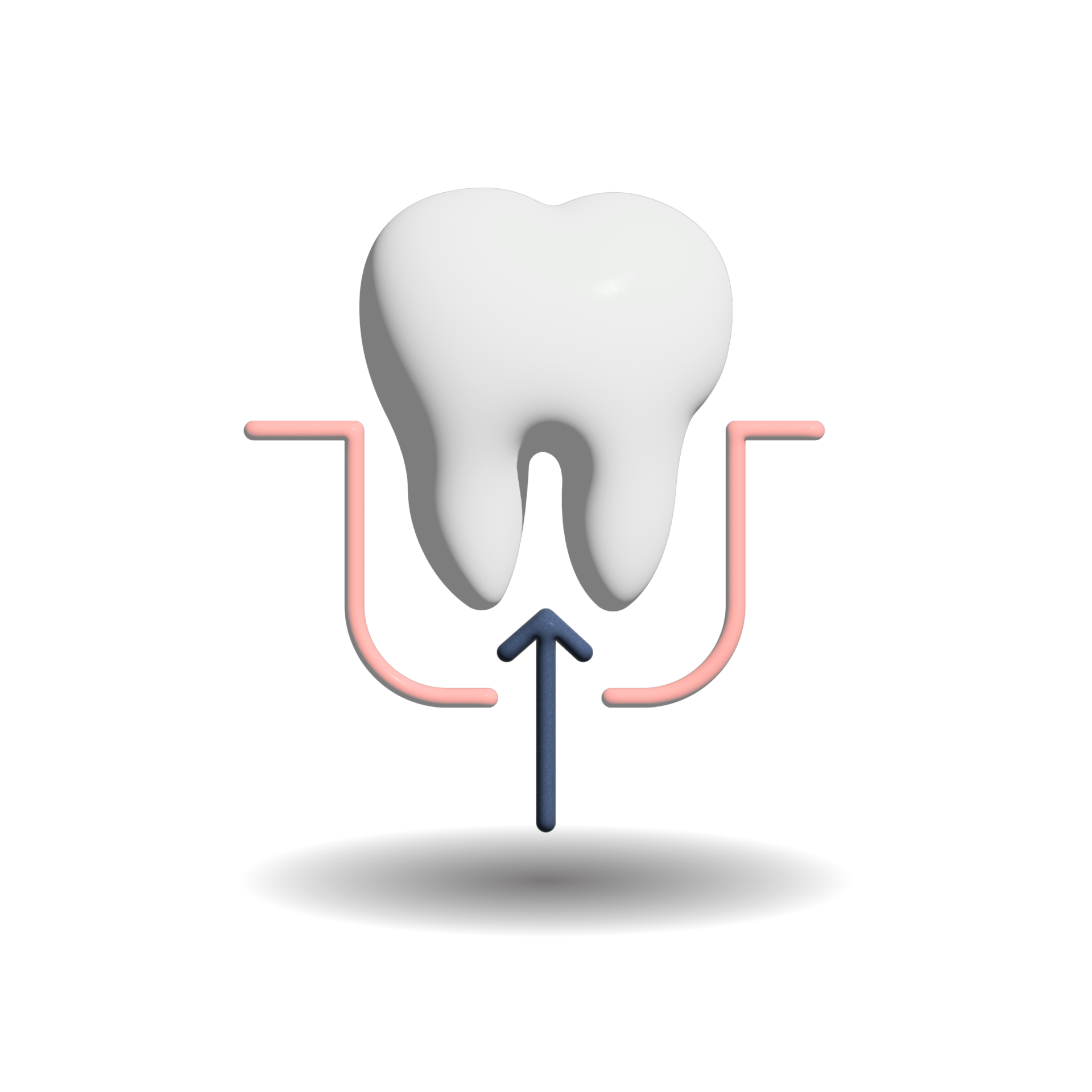
Tooth extraction is made possible by the natural structure between the tooth root and the surrounding bone. A small ligament connects the tooth to the bone, allowing controlled movement during removal.
Treatment begins with the administration of local anaesthetic to ensure the area is fully numbed. The procedure is typically carried out by an emergency dentist as part of urgent dental care, ensuring the tooth is removed safely and with patient comfort as a priority. The tooth is then gently loosened using specialised dental instruments to release the supporting fibres. Once mobile, the tooth is carefully removed from the socket using controlled force.
For impacted teeth, such as wisdom teeth, a minor surgical approach may be required. This can involve the removal of a small amount of gum or bone to allow safe access to the tooth.
Following removal, pressure is applied to the area to help control bleeding and support the initial stages of healing.
In more complex cases, treatment may be carried out by a specialist oral surgeon or referred appropriately. Sedation may also be offered in selected cases to support patient comfort, particularly during private emergency dentist appointments.
Modern dental techniques and equipment allow tooth extraction to be carried out in a controlled and predictable way, with a strong focus on patient comfort and effective emergency dental treatment.
Tooth extraction is usually completed in a single emergency dentist appointment as part of urgent dental care.
However, this is typically preceded by an initial assessment, which includes a review of your medical history, a clinical examination and any necessary x-rays. This helps ensure that emergency dental treatment is provided safely and appropriately.
During this stage, your dentist will also discuss options for replacing the extracted tooth, including dental implants, bridges or dentures where appropriate, often as part of a longer-term private emergency dentist treatment plan if ongoing care is required.
A follow-up appointment may be recommended after treatment to check healing and remove sutures if required. Patients are encouraged to contact the practice if they experience any concerns following treatment or after their emergency dentist appointment.
Taking care after your tooth extraction
• Follow all post-operative instructions provided by your dentist to support healing and reduce the risk of complications.
• Avoid smoking and alcohol for at least 24 hours after treatment.
• Avoid strenuous exercise for 24 hours to reduce the risk of bleeding.
• Maintain good oral hygiene, while taking care around the treated area.
- It is extremely important to follow the instructions given to you by your dentist to ensure uneventful healing. Usually, dietary cautions don’t apply for more than a day, and same is true with oral hygiene measures for the rest of the mouth. Each situation is different, however, and your Genix Dentist will tailor your post-operative instructions to you.
- You should avoid smoking, alcohol and exercise for 24 hours.

If you are a new patient you can fill out the form below to enquire.
Existing patients can book online or phone the practice directly.
Both new and existing patients will receive email confirmation if your enquiry.
New patients enquiries are sent through to our team and they will phone you back within 1-2 working days to book your consultation.
Existing patients will receive their booking confirmation from their online booking or phone call.
Visit the practice for your treatment and enjoy your new smile!

SS
MR
RS
PO
DS
PB
PS
SP
JD
Complete the following form and a member of our team will contact you as soon as possible.